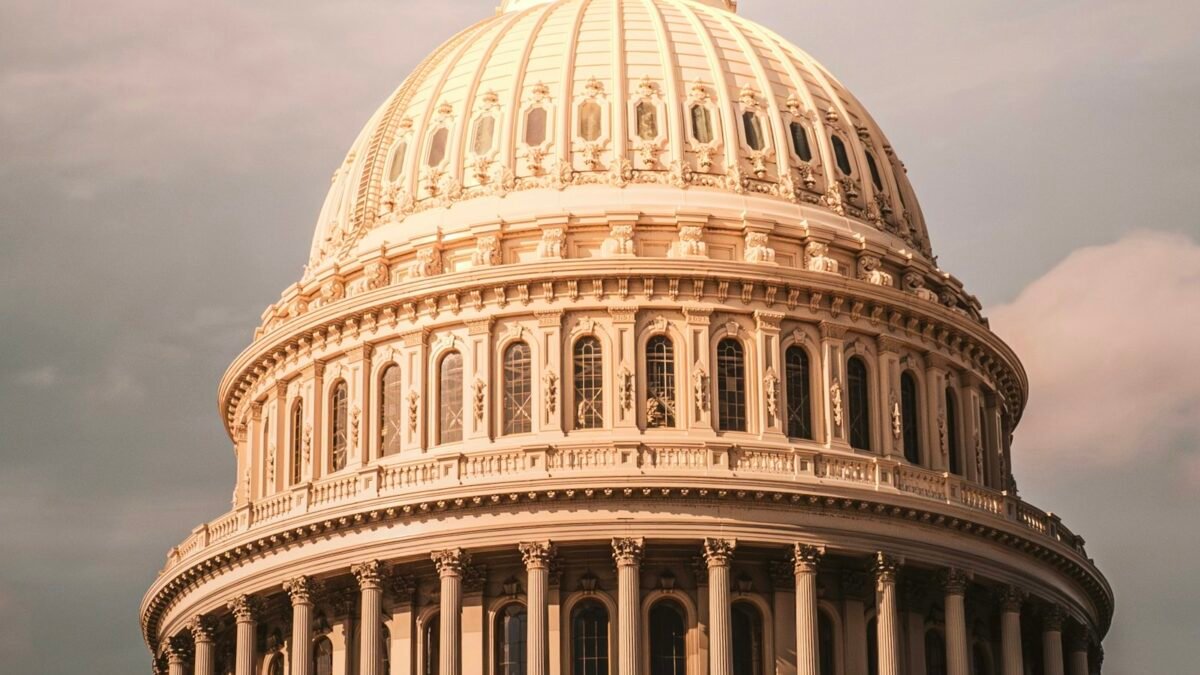
The midterm elections held in the United States on November 3, 2026, have resulted in a different political map in Washington. According to news summaries published on November 8, the Democratic Party has gained control of both the House of Representatives and the Senate, with potentially large majorities, although some races remain to be decided, including those in Mississippi and Alaska.
With that result, the opposition is preparing to exercise oversight of President Donald Trump’s administration. The incoming chairman of the House Oversight Committee has already advised officials to seek legal counsel. This article explains what powers Congress has, what to expect in the coming months, and how to interpret the still-undecided vote counts.
What the results say and what remains to be confirmed
It’s important to begin with a word of caution: the vote count in such a large election doesn’t happen overnight. The media projects winners when the available data allows, but mail-in ballots, provisional votes, and appeals in close races continue to be counted. Therefore, mentions of Mississippi and Alaska as still-unresolved seats serve as a reminder that the final size of the majorities may vary.
Lee también: Hegseth y la guerra con Irán: Trump lo respalda mientras crecen las dudas tras las elecciones
In the House of Representatives, where all 435 seats are up for election every two years, a change in the majority is relatively common in midterm elections, which historically penalize the president’s party. The Senate, with its staggered renewal of one-third of its seats, is more difficult to alter, so a simultaneous shift in both chambers is a remarkable outcome.
If you want to understand how pre-election figures are interpreted and why they sometimes differ from the final result, our article on how to read an opinion poll and its margin of error details the limitations of surveys. A margin of error of three points, for example, can be decisive in a very close race.
What can an opposition Congress do?
The U.S. Constitution grants Congress several oversight tools. The best known is committee investigation, which allows committees to convene public hearings, request documents, and issue subpoenas for witnesses to appear. The committee chair sets the pace and agenda, and therefore a change in majority has immediate consequences.
Lee también: Cómo se aprueba una ley: del proyecto a la publicación oficial
Another tool is budget control. Spending laws must pass through both houses, so an opposition majority can condition the funding of certain programs or force negotiations. The Senate also has the power to block or ratify appointments, and the possibility of initiating impeachment proceedings in the lower house, a step that requires a simple majority in that house and a supermajority in the Senate for conviction.
All of this does not mean that the legislature can govern on its own. The president retains veto power and control of the administration. The relationship between the two branches is more like a power struggle than a substitution. To understand the division of powers, it is helpful to review our explanation of the separation of powers and why it matters.
The investigation announcements
According to the cited news summary, Democrats are already preparing investigations into the administration, and the incoming chairman of the Oversight Committee has asked senior officials to seek legal counsel. This is a political statement that will need to be compared with the facts once the new Congress is sworn in and the committees are formally established.
Lee también: Separación de poderes: qué es y por qué importa en una democracia
Congressional investigations have limits. They must be linked to a legitimate legislative purpose, and witnesses can invoke privileges or challenge subpoenas in court. Litigation over documents and testimony can drag on for months, even years, and its outcome often depends on court decisions.
That’s why analysts often distinguish between rhetorical threats and concrete actions. What truly indicates the direction of an investigation are the subpoenas issued, the hearings scheduled, and the deadlines set. Until then, it’s best to treat announcements as a statement of intent, not as a fait accompli.
Changes at the White House
The same news summary indicates that President Trump replaced Chief of Staff Susie Wiles with Stephen Miller, who will begin working shortly and whose appointment is interpreted as a sign of a more confrontational approach. The Chief of Staff position is key because it coordinates the president’s schedule and controls access to his office.
A change of leadership like this, coming right after an unfavorable election, can be interpreted in several ways: as a reaction to the results, as a shift in strategy in anticipation of the new Congress, or as a move that was already planned. Without detailed official statements, any interpretation is hypothetical, and should be presented as such.
What will be observable is the management style: how negotiations are conducted with Congress, what priorities are set for the last two years of the term, and whether agreements or confrontations are sought on issues such as the budget, foreign policy, or judicial appointments.
What does this mean for the economy and markets?
Markets are closely watching the balance of power. A divided Congress tends to reduce the likelihood of major legislative reforms, which some investors see as stability and others as gridlock. In the week following the election, the US stock market saw sharp declines in technology stocks, and several analysts linked this movement to uncertainty surrounding the oversight of large investments in artificial intelligence.
However, it’s important to avoid attributing what is usually multifactorial to a single cause. Stock market movements reflect interest rates, corporate earnings, growth expectations, and investor psychology. Politics is just one piece of the puzzle.
For the average citizen, the most relevant aspect is the impact on the federal budget and public services. If you’re interested in how a budget is prepared and debated, you can consult our explainer on how a public budget is created.
How to follow this story without getting lost
The weeks following an election are filled with sensational headlines. A useful guideline is to follow three indicators: the results certified by the electoral authorities, the official composition of the new Congress’s committees, and the dates of the first hearings. Everything else is context or interpretation.
It also helps to compare at least two or three media outlets with different editorial approaches. If a story appears only on one side of the spectrum, you can wait for others to confirm it. And, when quoted from politicians, it’s worth asking whether they are verifiable commitments or campaign slogans.
For further information: How a law is passed · The separation of powers · How to read a poll .
Frequently Asked Questions
Who controls the US Congress after the elections?
According to news summaries from November 8, Democrats are poised to control the House and Senate, although some races remain to be decided, such as Mississippi and Alaska.
Can Congress investigate the government?
Yes. Committees can convene hearings, request documents, and issue subpoenas, although witnesses can appeal to the courts.
When does the new Congress take office?
The new legislators take office at the beginning of January, at which time the committees are formally established.
Source consulted: Morning News Update, November 8, 2026 (Mike Simpson) .