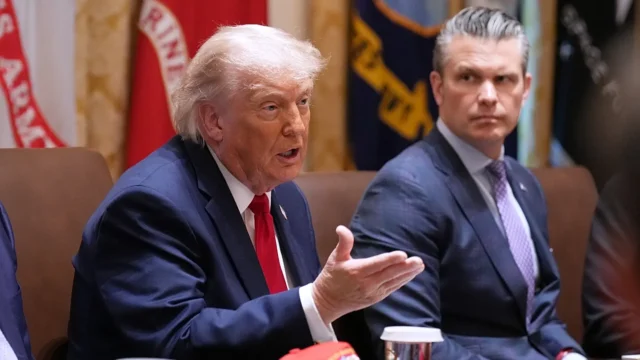
Donald Trump’s projects in the US capital are reaching their most delicate moment: with Democrats in control of Congress since the November 3rd elections, the projects the president is pushing in Washington will depend, in part, on a legislature he no longer controls. These are the three fronts he faces.
1. The White House Ballroom
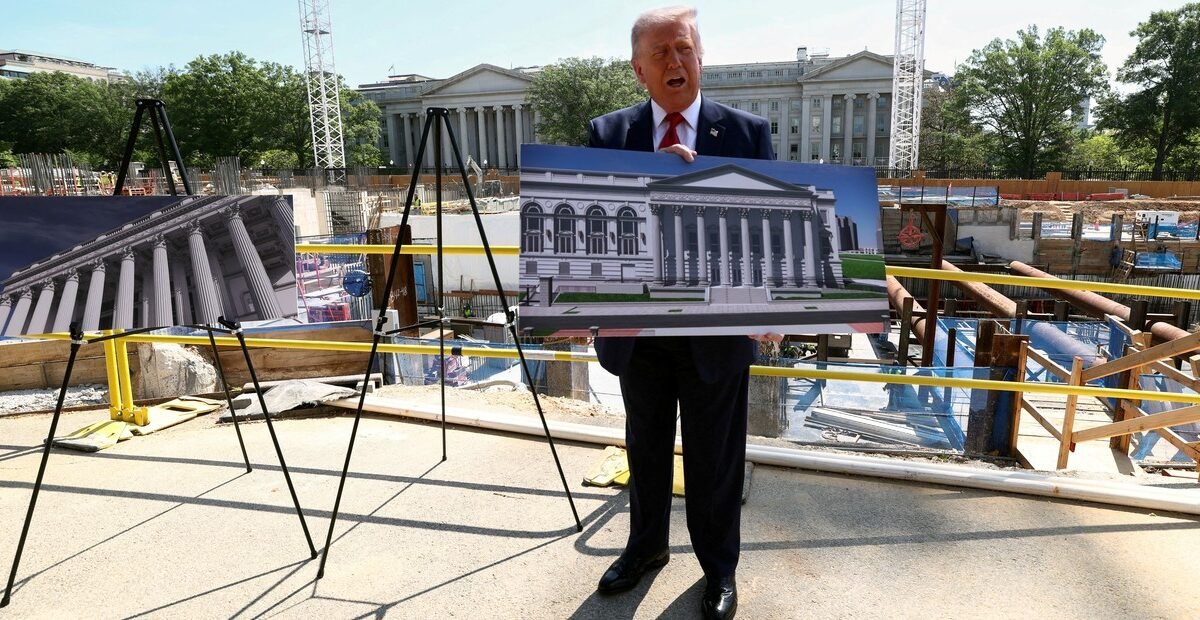
A day after losing the Democratic majority in Congress, Trump visited the construction site of his new ballroom at the White House, according to the Associated Press. This is a project that Congress has never formally approved, a detail that now takes on added significance: with a Democratic majority, any requests for funding or permits related to the project will be subject to much stricter scrutiny.
2. The bow and the judge’s order
The second front is legal. On Thursday, November 5, the National Capital Planning Commission definitively approved the planned arch, by a vote of 8 to 4, after a meeting lasting approximately nine and a half hours. That same day, Federal Judge Tanya Chutkan issued a temporary restraining order halting the project’s progress while the case is resolved. Such an order is provisional: it serves to prevent any action before the court has examined the merits of the case, and it does not imply that the project will be definitively rejected.
Lee también: Cómo se aprueba una ley: del proyecto a la publicación oficial
3. The Secret Service’s $1 billion
The third front is the budget. According to Punchbowl News, the Secret Service has requested approximately $1 billion to bolster White House security, partly to protect the new ballroom. Both House and Senate Republicans reacted coldly to the request, an indication that even within the president’s own party there is no consensus for spending of that magnitude.
What changes with the new Congress
Until now, Republicans tended to back the president in most power struggles. With a Democratic majority, three things could change:
- Funding requests will go through committees chaired by the opposition.
- Democrats will be able to convene hearings and request documents regarding the costs and contracting of the works.
- Projects that depended on legislative approval could be blocked or made conditional.
The White House maintains that its initiatives have sufficient support and that it has implemented them in accordance with the law. Critics counter that projects of this magnitude should be subject to broader public debate. The judicial calendar and the new distribution of power in Congress will now determine the pace.
Lee también: Separación de poderes: qué es y por qué importa en una democracia
Sources consulted: Associated Press and Punchbowl News.